ITALY · TRAVEL INSPIRATION
7 Italian Towns Worth Adding to Your Itinerary
Discover charming hill towns, coastal villages and timeless streets beyond Italy’s busiest tourist routes.
Italy’s most famous cities deserve their reputation. Rome, Florence and Venice can fill an entire journey on their own.
But some of the most memorable moments in Italy begin when you leave the classic route behind.
Across the country, smaller cities and towns reveal a different rhythm of Italian life: medieval streets climbing towards panoramic viewpoints, Renaissance squares surrounded by vineyards, whitewashed houses overlooking the Mediterranean and ancient neighbourhoods carved directly into stone.
Some make an easy day trip from a major city. Others deserve a night or two of their own.
All seven can transform a familiar Italian itinerary into something far more memorable.
Here are seven Italian towns worth making room for on your next journey through Italy.
01 – BERGAMO
Lombardy
There is something wonderfully theatrical about arriving in Bergamo.
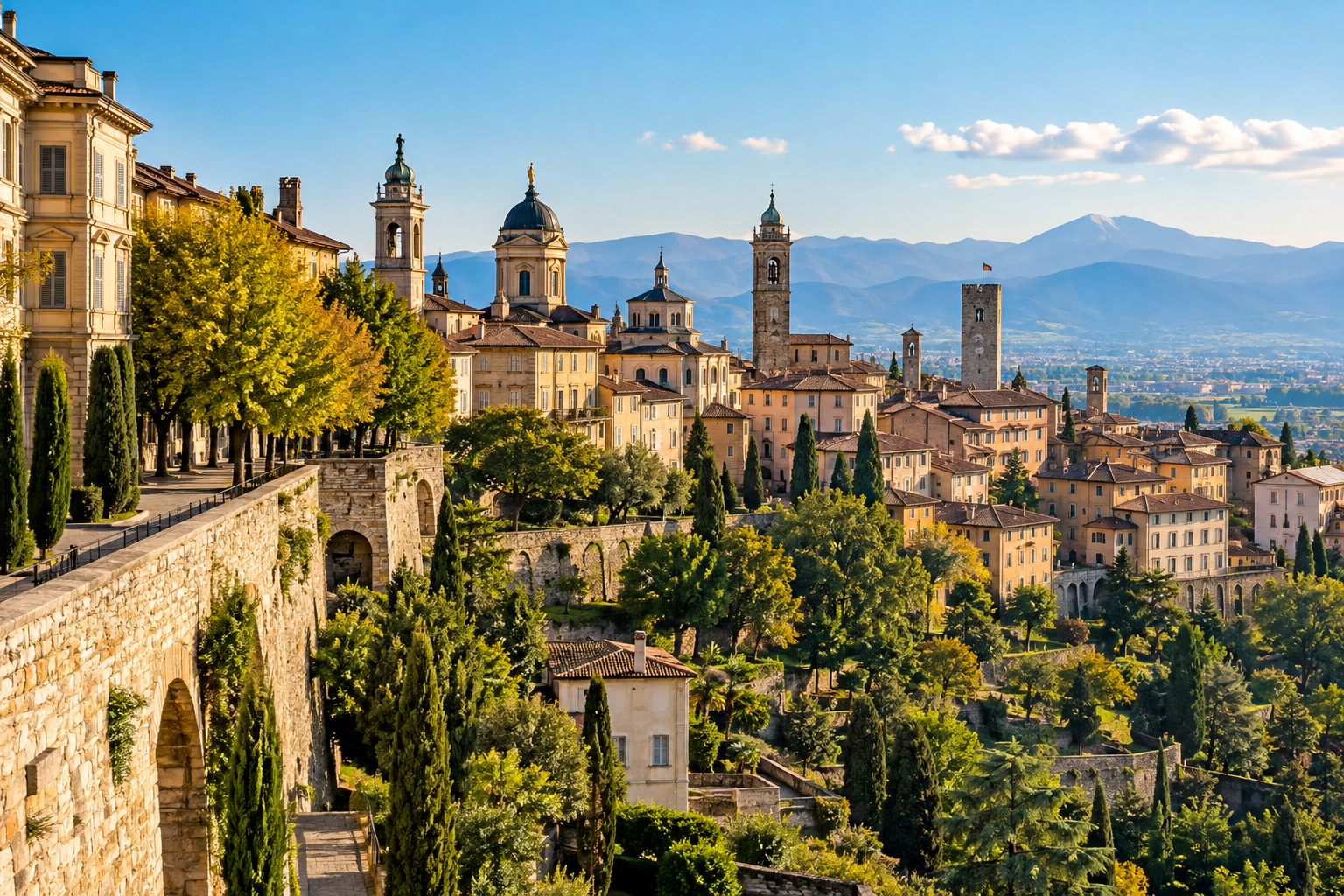
The modern lower city stretches across the plain, while above it rises Città Alta, the historic upper town enclosed by centuries-old Venetian walls. Passing through its gates feels less like entering another neighbourhood and more like stepping into another period of Italian history.
At the heart of the old city is Piazza Vecchia, surrounded by elegant historic buildings and narrow streets that invite you to wander without a plan. Nearby, Piazza Duomo brings together some of Bergamo’s most remarkable architecture, including the Basilica di Santa Maria Maggiore and the richly decorated Cappella Colleoni.
But Bergamo’s appeal isn’t limited to individual monuments. It is the combination of stone lanes, small cafés, hidden courtyards and views stretching towards the surrounding landscape that makes Città Alta worth slowing down for. The historic Venetian defensive walls surrounding the upper city form part of a UNESCO World Heritage property.
DON’T MISS
Piazza Vecchia · Basilica di Santa Maria Maggiore · Cappella Colleoni · Venetian Walls
TRAVEL TIP
Take the funicular up to Città Alta, explore the historic centre on foot and walk a section of the walls before sunset. Bergamo also works beautifully as an addition to a northern Italy itinerary rather than simply a transit point.
02 – MONTEPULCIANO
Tuscany
If you imagine a classic Tuscan hill town, there is a good chance it looks something like Montepulciano.
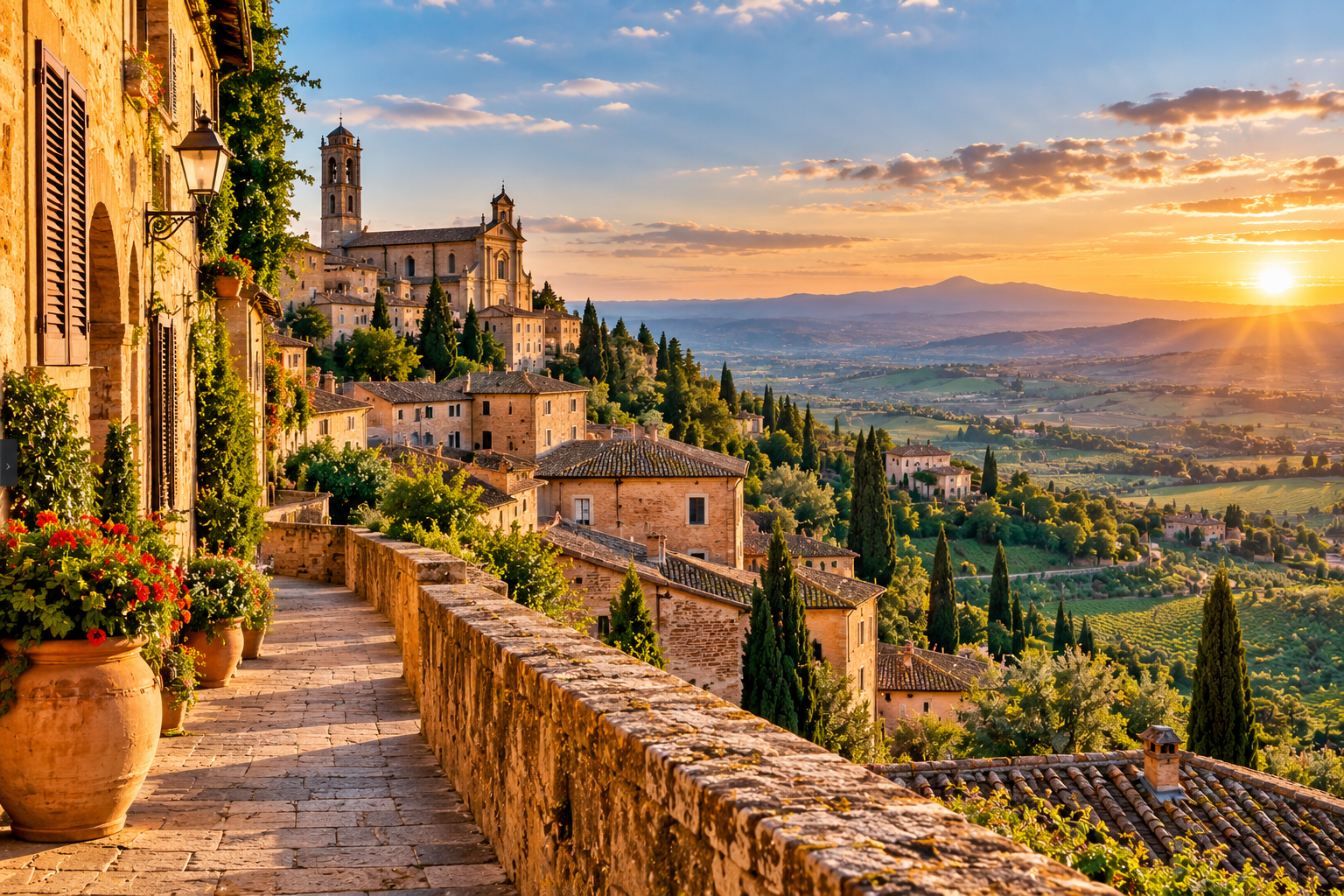
Perched between the Val d’Orcia and Val di Chiana, the town rises through a sequence of steep medieval and Renaissance streets towards Piazza Grande. Beyond the stone buildings are vineyards, olive groves and the rolling landscape that has made southern Tuscany one of Italy’s most recognisable regions.
The climb through the historic centre is part of the experience. Palazzi, small enotecas and quiet side streets gradually give way to Piazza Grande, where the Palazzo Comunale and Cathedral form the monumental heart of Montepulciano.
This is also wine country.
The surrounding vineyards produce Vino Nobile di Montepulciano DOCG, making the town particularly rewarding for travellers who want to combine architecture, landscape and Tuscan food and wine.
DON’T MISS
Piazza Grande · Palazzo Comunale · San Biagio · historic wine cellars
TRAVEL TIP
Stay until late afternoon or overnight if your itinerary allows. Once the rhythm of day-trippers slows, Montepulciano becomes an especially atmospheric base for exploring southern Tuscany.
03 – ORVIETO
Umbria
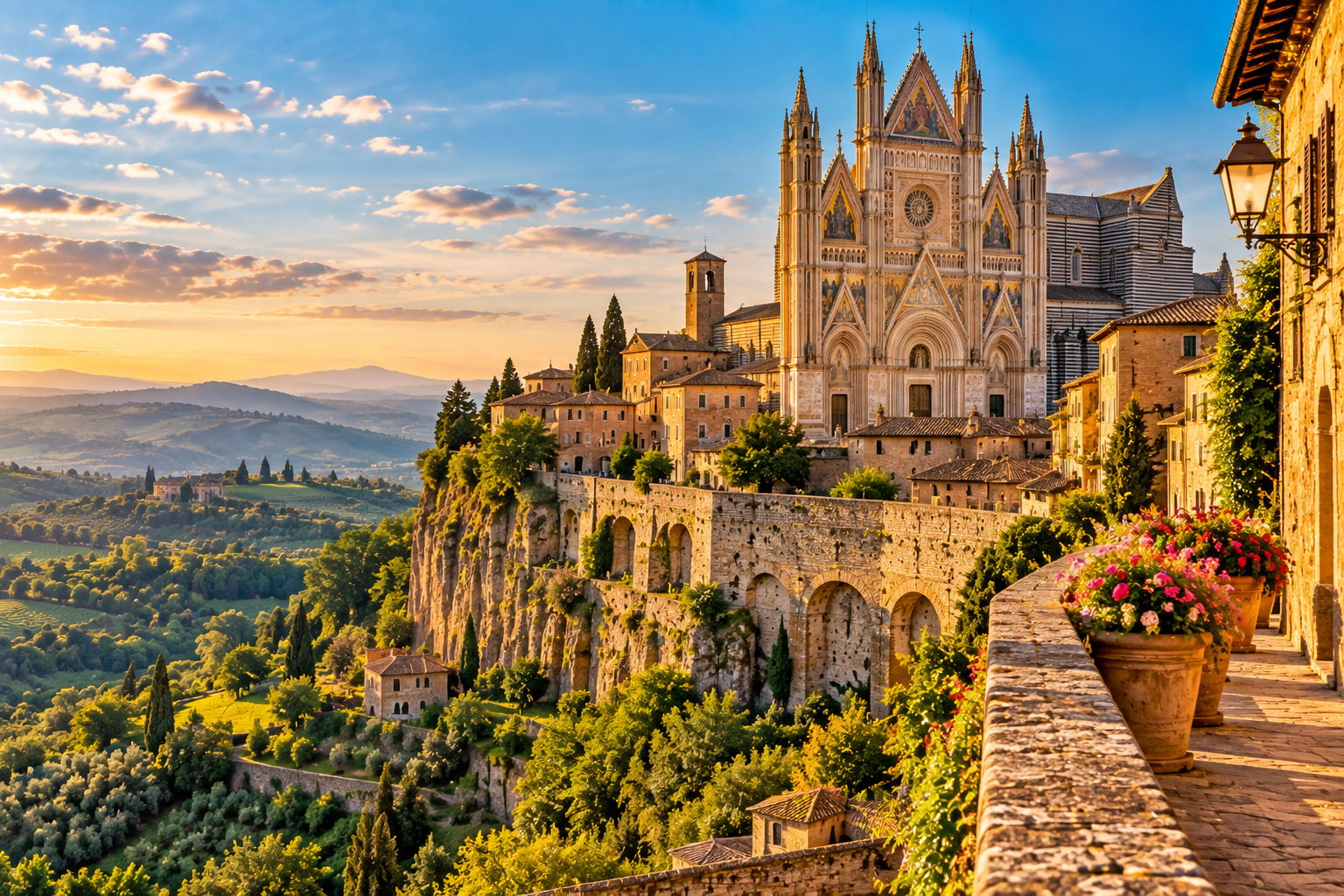
Rising dramatically above the Umbrian countryside on a great plateau of volcanic tuff, Orvieto is one of those Italian towns that makes an impression before you have even reached its historic centre.
At its heart stands the magnificent Duomo di Orvieto, whose elaborate façade, golden mosaics and soaring Gothic details make it one of the town’s defining landmarks. Inside, the Chapel of San Brizio preserves an important Renaissance fresco cycle begun by Beato Angelico and completed by Luca Signorelli.
Yet some of Orvieto’s most fascinating history lies beneath your feet. A network of caves, wells and passages extends beneath the city, revealing layers of life dating back to its Etruscan origins. Exploring Orvieto Underground creates a striking contrast with the sunlit piazzas and medieval streets above.
For another perspective, visit the remarkable Pozzo di San Patrizio, a 54-metre-deep Renaissance well built with an ingenious double-spiral staircase. Then slow down and wander: Orvieto rewards travellers who leave space between its major sights for quiet lanes, local food and views across the Umbrian hills.
DON’T MISS
Duomo di Orvieto · Orvieto Underground · Pozzo di San Patrizio · Torre del Moro
TRAVEL TIP
Orvieto works particularly well between Rome and Florence, making it an easy way to add a completely different atmosphere to a classic central-Italy itinerary. Give yourself enough time to explore both the city above ground and the extraordinary world hidden beneath it.
04 – RAVELLO
Campania
High above the Mediterranean, Ravello offers a very different perspective on the Amalfi Coast.
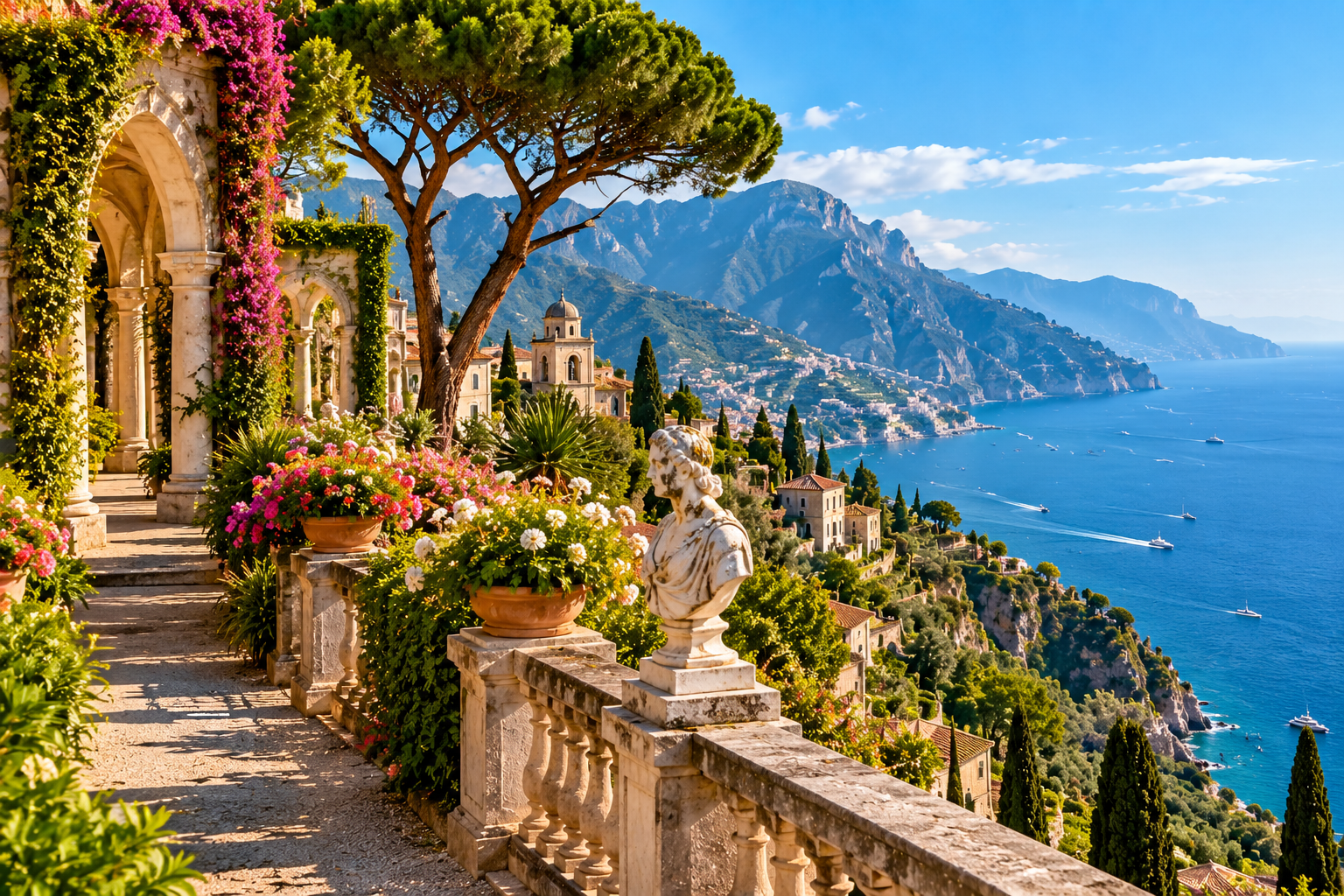
While towns such as Amalfi and Positano unfold directly towards the sea, Ravello sits higher in the hills, surrounded by gardens, historic villas and sweeping coastal views. Its quieter setting has long attracted artists, writers and musicians, and the town still feels distinctly removed from the bustle of the shoreline below.
Two places define much of Ravello’s character. Villa Rufolo, with its gardens and terraces overlooking the coast, has centuries of history and a strong association with Richard Wagner. Nearby, Villa Cimbrone is famous for its gardens and the spectacular Terrace of Infinity, where the landscape seems to disappear directly into the Mediterranean.
Between the villas, take time to explore Piazza Duomo, the cathedral and Ravello’s small streets. The town is compact, but this is not a place that benefits from rushing. Its greatest attraction is the atmosphere created by architecture, gardens, mountains and sea.
DON’T MISS
Villa Rufolo · Villa Cimbrone · Terrace of Infinity · Piazza Duomo
TRAVEL TIP
Visit early in the morning or stay into the evening, when Ravello becomes quieter. If you are travelling along the Amalfi Coast, treat it as more than a quick viewpoint stop and allow several hours to explore the gardens and historic centre.
05 – ALBEROBELLO
Puglia
Few places in Italy are as immediately recognisable as Alberobello.
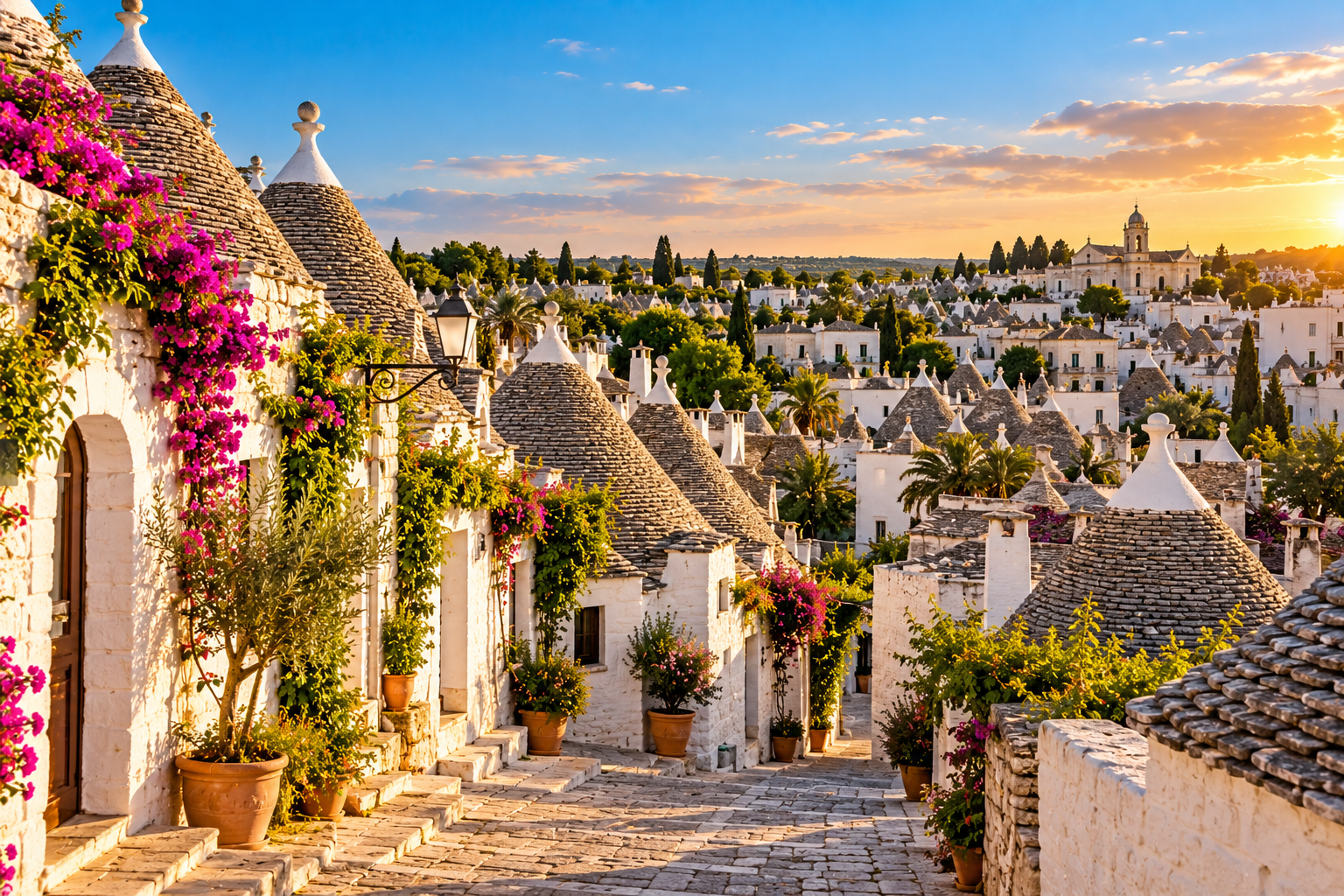
Across its historic neighbourhoods, hundreds of whitewashed trulli rise beneath distinctive conical stone roofs, creating a landscape unlike almost anywhere else in the country. These traditional limestone buildings were constructed using a dry-stone technique, without mortar, and the trulli of Alberobello have been protected as a UNESCO World Heritage Site since 1996.
The greatest concentration can be found in Rione Monti, where narrow lanes climb between rows of trulli.
It is also the busiest part of town. For a quieter perspective, cross towards Aia Piccola, where many trulli remain residential and the neighbourhood retains a more lived-in atmosphere.
Look beyond the famous rooftops, too. Alberobello reveals the architectural traditions of rural Puglia and makes a natural addition to a journey through the Valle d’Itria, alongside olive groves, masserie and other whitewashed towns.
DON’T MISS
Rione Monti · Aia Piccola · Trullo Sovrano · panoramic views across the trulli
TRAVEL TIP
Explore early in the morning if possible, before the busiest day-trip hours.
Alberobello can be combined with other Valle d’Itria destinations, but allowing time to wander beyond the main streets makes the experience considerably better.
06 – MATERA
Basilicata
Matera does not resemble anywhere else on this itinerary.
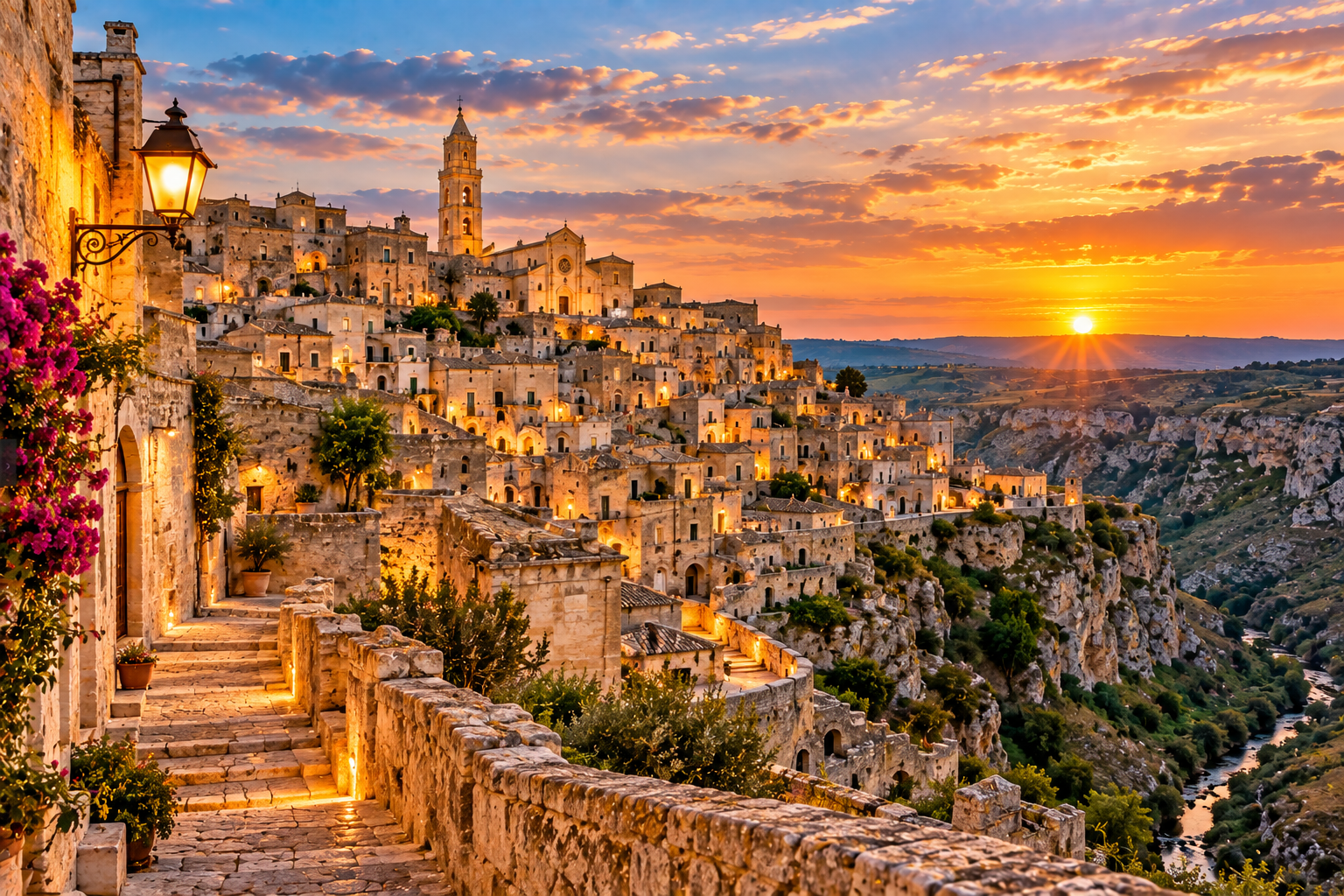
Its historic Sassi districts descend through a dramatic landscape of stone houses, stairways, courtyards and churches carved into the rock. Human settlement in the area stretches back thousands of years, and UNESCO describes the Sassi and the Park of the Rupestrian Churches as an outstanding example of a rock-cut settlement adapted to its terrain and ecosystem.
From viewpoints around the historic centre, the city appears almost sculpted rather than built. But Matera becomes far more interesting once you descend into it. Streets turn into staircases, rooftops become paths, and caves open behind seemingly ordinary façades.
Explore Sasso Caveoso and Sasso Barisano, step inside one of the rupestrian churches and cross towards the viewpoints overlooking the ravine. As daylight fades, the stone takes on warmer tones and lights begin appearing across the Sassi – one of the reasons Matera deserves more than a hurried stop.
DON’T MISS
Sasso Caveoso · Sasso Barisano · rock churches · viewpoints across the Gravina
TRAVEL TIP
Stay at least one night if your itinerary allows. Matera changes dramatically between daylight and evening, and an overnight stay gives you time to explore the Sassi after many day visitors have left.
07 – CEFALÙ
Sicily
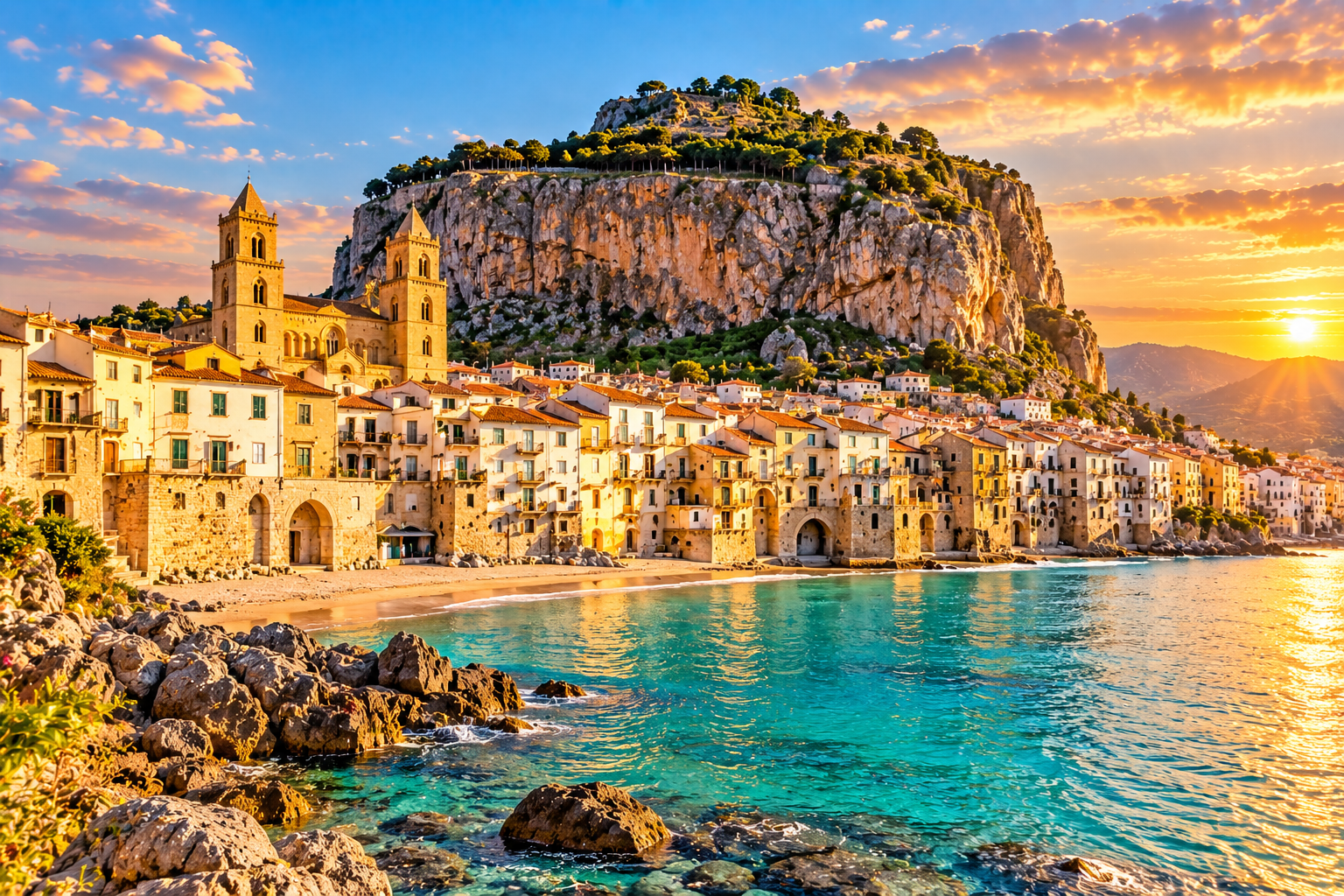
On Sicily’s northern coast, Cefalù brings together several things travellers come to Italy looking for: historic streets, monumental architecture, mountains and the Mediterranean – all within a remarkably compact town.
The historic centre sits between the sea and La Rocca, the enormous rocky promontory rising behind Cefalù.
At its heart stands the Cathedral of Cefalù, founded in the 12th century under Norman King Roger II. Together with Arab-Norman monuments in Palermo and the cathedral at Monreale, it forms part of a UNESCO World Heritage Site.
From Piazza Duomo, narrow streets lead towards the waterfront, where old buildings stand almost directly above the sea. The medieval Lavatoio offers another glimpse into the town’s history, while climbing La Rocca rewards you with expansive views over Cefalù and the Sicilian coastline.
What makes Cefalù especially appealing is how naturally these elements coexist.
You can spend the morning among medieval architecture, climb above the town for panoramic views and finish the afternoon beside the Mediterranean.
DON’T MISS
Cathedral of Cefalù · La Rocca · medieval Lavatoio · historic waterfront
TRAVEL TIP
Cefalù is easily incorporated into a northern Sicily itinerary and can be visited from Palermo, but staying overnight gives you a chance to experience the historic centre after the daytime crowds thin out.
WHICH ITALIAN TOWN SHOULD YOU CHOOSE?
TRAVEL SMARTER
How to Add These Italian Towns to Your Itinerary
The best Italian towns to visit are not necessarily places that require an entirely separate trip.
Many work beautifully as additions to routes you may already be planning.
Bergamo fits naturally into a northern Italy journey through Milan and Lombardy. Montepulciano and Orvieto can add smaller historic centres and countryside to a Rome-Florence route. Ravello belongs naturally within an Amalfi Coast itinerary, while Alberobello and Matera can be combined into a journey through southern Italy. Cefalù makes an excellent addition to a Sicily itinerary, particularly when travelling through Palermo and the island’s northern coast.
The important thing is not to fit all seven into one trip.
Choose the places that complement the route you already have, and give them enough time to become part of the journey rather than another pin on the map.
Planning Your Italy Trip
Italy rewards slower travel.
Distances that look short on a map can involve mountain roads, regional trains or multiple connections, while historic centres are often best explored entirely on foot. Building fewer bases into your itinerary can give you more time to experience each destination properly.
For popular places such as Ravello, Alberobello and Cefalù, travelling outside the busiest hours can also make a significant difference. Early mornings and evenings often reveal a completely different side of towns that become busy during the middle of the day.
And when possible, stay overnight.
A town that feels busy at 14:00 can feel almost entirely different after dinner.
PLAN YOUR JOURNEY
Go Beyond the Classic Italy Itinerary
Rome, Florence and Venice may introduce you to Italy.
But they are only the beginning.
From the stone landscapes of Matera to the vineyards around Montepulciano and the Mediterranean views of Ravello and Cefalù, smaller destinations reveal just how varied Italy becomes once you move beyond its most familiar routes.
Choose one. Build it into your itinerary. And leave enough space to discover what lies between the places you originally planned to see.
Explore our Italy Travel Guides →

Migueliyo Travel
Explore Europe with premium travel guides, interactive maps and carefully curated local recommendations.
© 2026 Migueliyo Travel. All rights reserved.